
The Conflict Between Formality and Natural Thought
Getting Things DoneThe book traces how imposed planning rituals can obstruct natural creativity and how informal capture restores movement.
increasing Bearing strength in each event
 decreasing
Bearing strength in each eventdecreasingA Schoolroom Lesson Persists
The Outline Comes First
A Classroom Rule
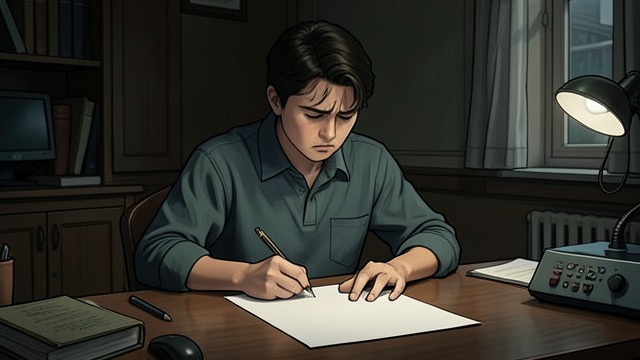
Allen remembers being taught to create an outline before writing a report. The assignment made planning seem like a preliminary formality that must precede actual expression.
For some students, the blank outline became more difficult than the report itself.
A Habit of Resistance
Allen eventually learned to write the report first and construct an outline afterward. The experience illustrates how imposed sequences can feel disconnected from the way a person actually generates ideas.
A lesson about organization can accidentally teach avoidance of planning.
Business Repeats the Pattern
Documents Lose Their Work Connection
Goals on Paper
Organizations may produce outlines labeled goals or objectives that sit in drawers or emails without shaping operational activity. Formal structure exists, but it may not reflect what people are doing or value.
The document satisfies a requirement without guiding the work.
Planning Becomes Suspect
When people experience this disconnect repeatedly, they resist planning meetings and wait until the last minute. The problem is not necessarily planning itself but a form that ignores natural thinking and real action.
The inherited pattern contributes to the cycle of delay and crisis.
The Mind Already Plans

Ordinary Activity Contains Planning
Invisible Sequences
Getting dressed, going shopping, and arranging dinner require a series of thoughts about purpose, desired outcome, possibilities, order, and action. People plan constantly without naming the process.
The brain is presented as an experienced planner.
A Usable Pattern
Recognizing natural planning makes it possible to support rather than suppress the mind’s sequence. A person can write down the stages when a project is complex or when memory alone is insufficient.
The conflict between formal method and natural thought begins to resolve through a model grounded in ordinary behavior.
Good Ideas Are Delayed

Evaluation Arrives Before Exploration
Creativity Is Constricted
A meeting may begin by asking who has a good idea before purpose, vision, and relevant information are clear. Participants are pressured to offer polished solutions without a shared understanding of the problem.
They may censor incomplete thoughts before those thoughts can develop.
Expansion Must Come First
The book recommends collecting many ideas before analysis becomes the driver. Critical evaluation still matters, but it belongs in a stage where enough possibilities exist to compare.
The conflict is resolved by giving creative thought an appropriate place in the process.
Informality Releases Thought

A Pencil and an Envelope
Less Ceremony, More Progress
Informal brainstorming and rough organizing can clarify a project without elaborate planning machinery. Back-of-the-envelope thinking often creates substantial value at low cost.
Formal charts and software remain useful when complexity requires them, but they are not the default solution.
A Practical Reconciliation
The person can begin with natural thought, capture it externally, and add structure only to the degree needed. Planning becomes a flexible support for action rather than a ritual to endure.
The tension between spontaneity and organization resolves in favor of methods that fit the work.
During Allen’s recollection of fourth grade
As the book examines organizational planning
At the introduction of the natural model
When a group asks for a good idea too early
After the five planning phases are applied
